
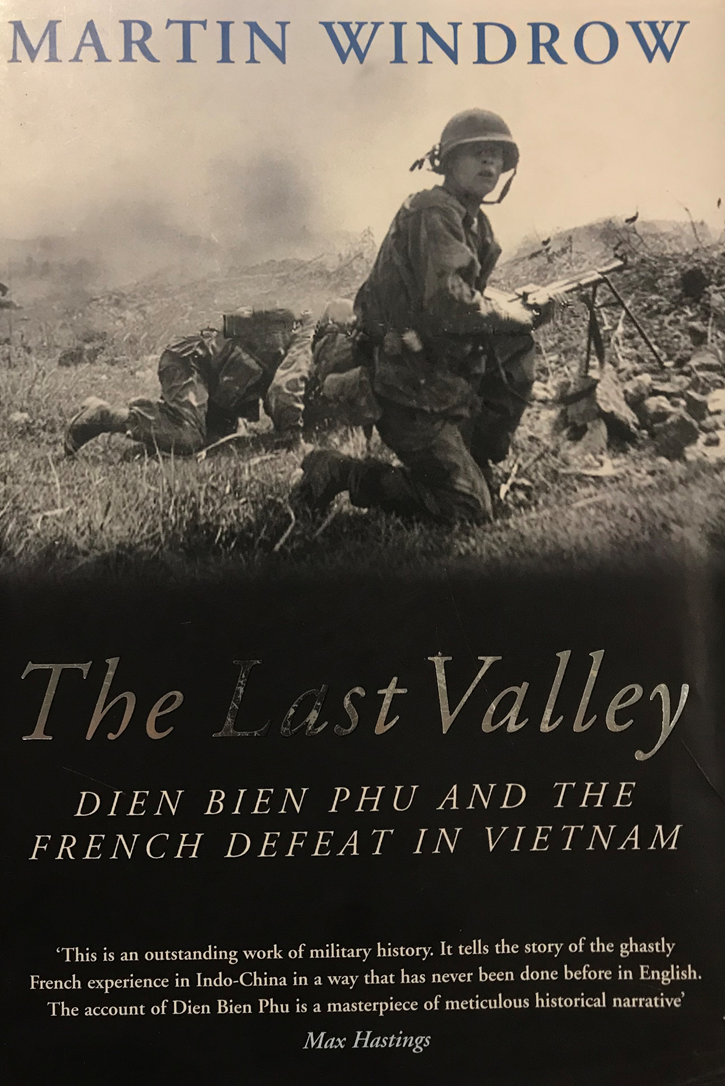
Ukraine is in the news. The best description of the horror of being shelled is taken from p371 onward of the excellent book whose cover is pictured below:

“The most clichéd but accurate metaphor for the sound of incoming shells in flight is that of an old-fashioned steam express train rushing past a few feet away. Depending on their distance,speed and angle, shells tunnelling through the air make slightly different noises, so a heavy barrage weaves itself into a bewildering cacophony of sounds; but the rushing always ends the same way, with a thunderclap detonation – sscchiiiii…boom! Hollywood’s microphones fail to convey either the sharpness or the loudness of battlefield explosions; and the visual effects normally used to simulate shellfire – with plastic bags of petrol and aluminium silicate – are equally misleading………………….

The most obvious sign of primary injury is rupture of the eardrums, which may occur when air pressure rises to anything between 5 and 15 pounds per square inch; war memoirs offer many instances of men killed by blast who appear peacefully asleep apart from tell-tale bleeding from the ears. The lethal internal damage caused by pressures of 50psi and upwards do not present dramatic outward signs (though shellfire casualties typically suffer multiple injuries).

It is the gas containing organs which sustain immediate and often fatal damage from the pressure wave: the lungs and occasionally the colon suffer catastrophic injury from the instantaneous compression effect of the blast. Large blood-filled cavities are formed in the spongy alveoli of the lung, and fatal air embolisms are released into the arterial system; les often, the bowels may rupture as – in a few cases – may the spleen and liver.

Secondary injuries will be more obviously dramatic. When a shell bursts the steel case breaks up into fragments of all shapes and sizes, from tiny beads to twisted chunks weighing several pounds. These – together with stones, pieces of weapons and equipment, and even large bone fragments from casualties nearer the blast – whirl outwards from the centre at different speeds. sometimes a man is unaware that he has been pierced by a small splinter until somebody else points out the bloodstained hole in his clothing. Larger fragments, cartwheeling unevenly through the air edged with jagged blades and hooks, can dismember and disembowel.

In many cases the evidence confronting an eyewitness is all too vivid. In others the immediate reaction is one of simple puzzlement: blast and steel can play such extreme games with the human form that the observer does not understand what he is looking at. When some random physical reference point suddenly jerks the whole image into a comprehensible pattern, the shock of recognition can be appalling. The results of massive destruction – the ruined hulk of a torso, the crimson rack of ribs, the glistening entrails, limbs ripped away and scattered, a severed head – have a charnelhouse squalor that denies all human dignity.

On chilly evenings at Dien Bien Phu the warm, gaping body cavities steamed visibly, and the opened-up bowels gave off a stink of faeces.

The Marianne sits above interesting words

20170211_090424

Again history sheds a fascinating light which Tony Moxon finds relevant to today’s dialogue around the gap between rich and poor:

from Andrew Roberts book ‘Napoleon the Great’

“Lying deep within the French Revolution were the seeds of its own destruction because the concepts of liberty,equality and fraternity are mutually exclusive. A society can be formed around two of them, but never all three. Liberty and equality, if they are strictly observed, will obliterate fraternity; equality and fraternity must extinguish liberty; and fraternity and liberty can only come at the expense of equality. If extreme equality of outcome is the ultimate goal, as it was for the Jacobins, it will crush liberty and fraternity. With his creation of a new nobility Napoleon dispensed with that concept of equality, and instead enshrined in the French policy the concept of equality before the law……..”

Emancipation

fouailly-cremant

From Andrew Roberts book NAPOLEON THE GREAT published by Allen Lane in 2014 comes an interesting marker on the road to the rights women enjoy today.

“The major criticisms levelled at the Code over the past two centuries have been that it was socially conservative, too supportive of the middle classes, of the individual and of paterfamilias, that it made wives too dependent on their husbands, and that its inheritance provisions were damaging for an agrarian economy. It was certainly true  that the Code was deeply sexist by twenty-first century standards, with a strong patriacharchal bias. Article 213 of the Civil Code stated: ‘A husband owes protection to his wife, a wife obedience to her husband.’ Grounds for divorce were restricted to adultery (and then only if the husband introduced a permanent mistress into the family household), conviction of a serious crime, and grave insults or cruelty, but it could be obtained by mutual agreement so long as the grounds were kept private. A wife could be imprisoned for two years for adultery, while a man would only be fined. A husband could not be prosecuted if he murdered his wife caught in flagrante. The Code protected married and single men from having to support an illegitimate child, or even being identified as the father. It also prevented women from making women from making legal contracts, taking part in lawsuits, serving as a witness in court or to births, deaths or marriages. Wives could not sell produce in markets without their husbands` permission, and were forbidden to give, sell or mortgage property without their husbands`written consent. Unmarried women could not be legal guardians or witness wills. In all this the Code reflects Napoleon’s profound sexism: ‘Women should not be looked upon as equals of men’ he said. ‘ They are in fact, only machines for making babies’……………………………

“Napoleon’s profound sexism emerged in his education provisions……

‘Public education almost always makes bad women flighty, coquettish and unstable,’ he told the Conseil in March 1806. ‘ Being educated together, which is so good for men, especially for teaching them to help each other and preparing them by comradeship for the battle of life, is a school of corruption for women. Men are made for the full glare of life. Women are made for the seclusion of family life and to live at home’.

As with the Code Napoleon, the lack of girls`formal education needs to be seen here too in the context of his time; at the beginning of the nineteenth century there were very few girls`schools in England or America, and none run by the state.